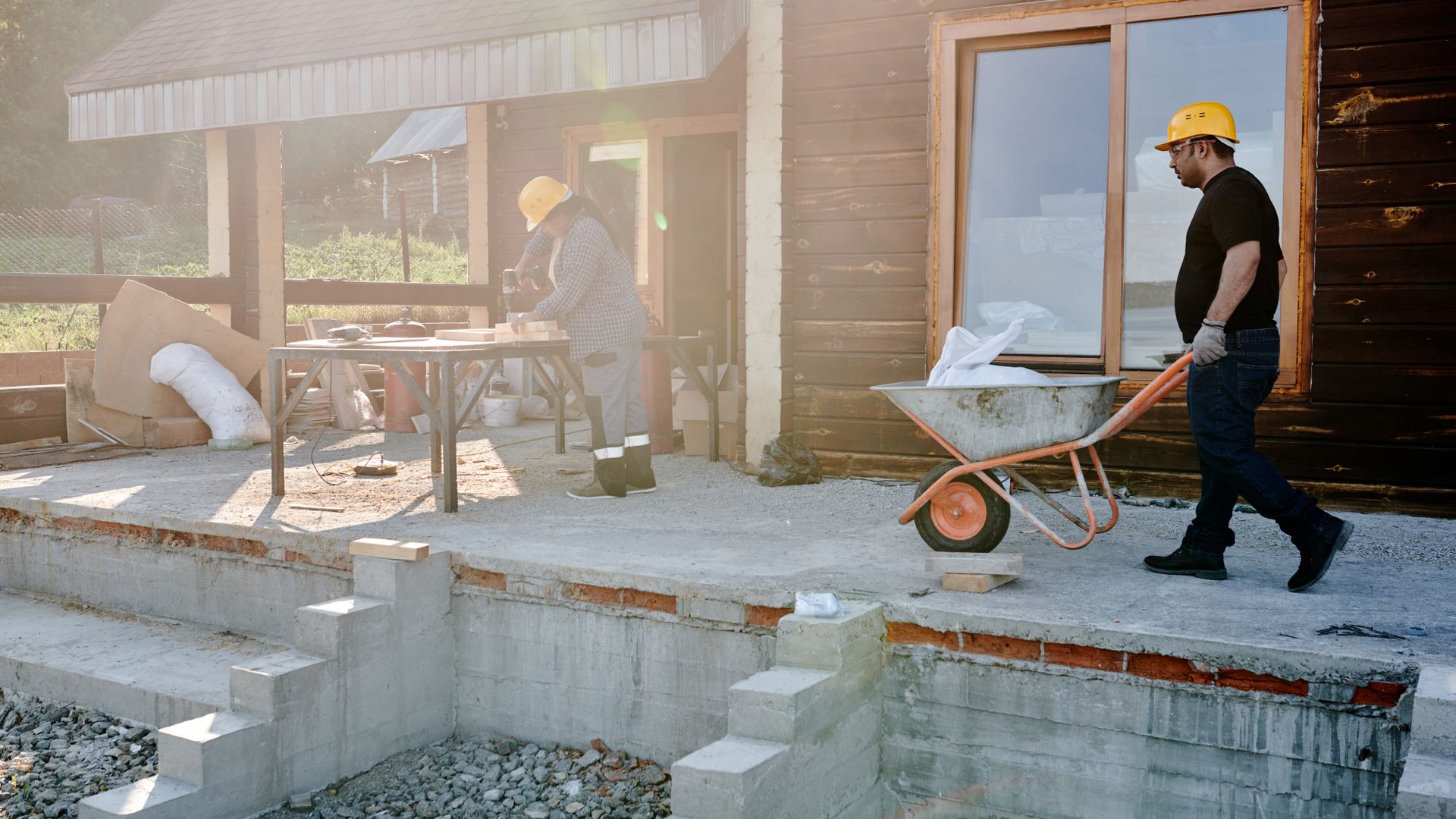
Cyprus · general building
General building in Cyprus.Compare several quotes at once.
Building contractors in Cyprus range from registered firms running full construction crews to one-van outfits taking on extensions. Knowing which class of contractor your project needs — and how to check registration — saves you the expensive lessons this guide covers.
- No paid placement
- Ranking weights published
- Registrations checked against source
Photo: Mikael Blomkvist
- Companies listed
- 35
- Districts covered
- 5
What a building contractor does on a Cyprus project
A general building contractor takes responsibility for delivering the built works: labour, materials, plant, subcontractors and site management. On a typical Cypriot house, extension or renovation, the contractor casts the concrete frame, builds the blockwork, coordinates the electrician, plumber and aluminium fabricator, and hands you a finished building that matches the permitted drawings. What the contractor does not do is design the building or supervise their own work on your behalf — those jobs belong to your architect and engineer, and keeping the roles separate is one of the cheapest forms of protection you can buy.
Cypriot construction has its own habits you should understand before you hire anyone. Structures are almost always reinforced concrete frames with brick or block infill, engineered for seismic loads — Cyprus is an earthquake zone and the structural rules reflect it. Flat roofs are common and need proper waterproofing and insulation to cope with fierce summer heat. Much of the skilled workforce moves between firms, so the contractor you hire is partly a recruiter and manager of crews rather than a fixed team. All of this means the firm's organisation matters as much as any individual tradesman's skill.
Registration: the first thing you check
Building contractors in Cyprus are regulated by the Council for the Registration and Control of Building and Civil Engineering Contractors. Registration is divided into classes that cap the size and type of project a contractor may lawfully undertake, and an annual licence must be renewed to stay active. Before you get attached to anyone's quote, do three things:
- Get the registration number and verify it on the Council's register.
- Check the class covers your project's scale — a contractor registered for small works cannot lawfully run your two-storey new build.
- Confirm the annual licence is current, not just that registration existed at some point.
Alongside the contractor, your permit drawings and structural design must come from ETEK-registered professionals, and site supervision by a registered engineer or architect is part of the permit system. If someone offers to "sort the permit" while also building the job with no independent supervision, you have found the arrangement that produces most of the horror stories.
Insurance is the other paper check: employer's liability for the crew, public liability for your neighbours' cars and boundary walls, and — on bigger jobs — contractors' all-risks cover for the works themselves. Ask for certificates, not assurances.
How tendering and quoting work
For anything beyond trivial works, get priced offers from more than one registered contractor, and make them price the same thing. The tool for this is a proper drawing set and a schedule of works or bill of quantities prepared by your designer. Without it, each contractor quotes their own guess at your intentions and the numbers are not comparable — the lowest bid usually wins by leaving things out, not by being cheaper.
Read each offer for what it includes and excludes. The classic gaps in Cypriot quotes are provisional sums for kitchens, sanitaryware and tiles (set unrealistically low to flatter the total), exclusions for rock excavation, and vague allowances for external works. Ask every bidder the same questions in writing and keep the answers; they become contract documents later.
Then interrogate the numbers you cannot see. A bid far below the pack is not a bargain — it is a contractor who has missed something, plans to claw it back through variations, or intends to squeeze subcontractors until they walk off your site.
What moves the price up or down
You cannot control the market, but you can control most of what makes your project expensive:
- Design complexity. Curves, cantilevers, large openings and split levels all cost more than rectangles. Decide where complexity earns its keep.
- Ground and access. Sloping plots, rock, high water tables and streets a lorry cannot enter show up in the price whether the quote admits it or not.
- Specification. The spread between local-standard and imported finishes is enormous. Fix your specification before tender, not during construction.
- Timing of decisions. Every choice you make after the contract is signed is priced without competition. Late decisions are the single most controllable cost driver.
- Programme pressure. Compressed timetables mean overtime and premium sequencing. If you can be flexible, say so at tender.
Live price figures for common project types are held in this site's database and shown separately, so treat this section as the explanation behind those numbers rather than a substitute for them.
Running the project step by step
- Design and permits. Your ETEK-registered architect or engineer produces drawings and secures planning and building permits before anyone mobilises.
- Tender. Identical documents go to shortlisted registered contractors; you compare aligned bids and check references from completed jobs — visit at least one.
- Contract. Sign a written contract fixing price, programme, staged payments, retention, variation procedure and defects liability. Never build on a handshake, however warm.
- Mobilisation and structure. Setting out, excavation, foundations and the concrete frame, inspected by your supervising engineer at the stages that matter — reinforcement before pours above all.
- Envelope and first fix. Blockwork, roof, waterproofing, windows, and the electrician's and plumber's first-fix runs while walls are open.
- Finishes. Plaster, screeds, tiling, joinery, second fix and decoration — the phase where your decision speed sets the pace.
- Snagging and handover. A written defects list, completion of every item, then release of retention only when the list is genuinely cleared.
- Certificates. Collect the paperwork trail — permit approvals, electrical certification, warranties — because you will need it at resale.
Mistakes that cost Cyprus self-builders real money
The same errors repeat on site after site. Paying too much up front, which converts your leverage into hope. Skipping the written contract because the contractor came recommended by a relative. Treating provisional sums as real prices instead of placeholders. Letting the contractor's own engineer double as your supervisor. Making changes verbally on site with no written variation and no agreed price. Moving in before snagging is complete, after which defects get fixed at the speed of goodwill. And ignoring the permit process on "small" works, which surfaces later as a problem with the title deeds or a hostile letter from the district authority.
Managing variations without losing control
Every build changes along the way — the question is whether the changes are managed or merely absorbed into a growing final bill. Put a variation procedure in the contract and then actually use it: no change proceeds until its price and time effect are agreed in writing, even for "small" items, because small items accumulate into the classic end-of-job shock. Keep a running variations log yourself, numbered, with the agreed amounts, and reconcile it against every interim payment request. When the contractor claims extra time or money for something you consider included, the tender documents and your written question-and-answer trail from the bidding stage are what settle it — which is why you kept them.
Site meetings are the other control tool. A short meeting at a fixed interval, with your supervising engineer present and brief written notes afterwards, keeps decisions timely and attributable. Most budget overruns on Cypriot domestic projects are not caused by dishonesty; they are caused by decisions made informally, remembered differently.
When permits apply
As a rule of thumb, structural work, extensions, new openings, changes of use and anything visible that alters the building need permission, while like-for-like internal refurbishment generally does not — but the boundary is drawn by the authorities, not by your contractor's optimism. Unpermitted works in Cyprus have a long tail: they obstruct the issue and transfer of title deeds, complicate sales and can trigger enforcement. Ask your ETEK-registered designer to confirm in writing what your specific project needs before you commit money. The permit takes time; the mess from skipping it takes longer.
Coastal versus inland building
Where you build changes how you build. On the coast — Limassol, Larnaca, Paphos, Protaras — salt air attacks exposed steel, external fixings and aluminium, so reinforcement cover, coatings and marine-grade hardware deserve explicit attention in your specification, and flat-roof waterproofing works harder against humidity. Inland and in the Nicosia plain, the enemy is thermal swing: bigger day-night and summer-winter ranges argue for better insulation and shading. In Troodos villages, add frost, snow loads on roofs, and mountain access that raises delivery costs. A contractor with completed jobs in your area has already paid for these lessons — ask to see them.
General building companies in Cyprus
12 companies covering this area.
Polart Construction
planning permits · Strovolos Iii, Nicosia
Polart Construction is an architecture practice in Strovolos Iii, in the Nicosia district. The listed address is 79 Λεωφόρος Σταυρού. Recorded services include planning submissions, drawings, site supervision. We hold a phone number and a website for this entry. Details come from OpenStreetMap and have not been verified with the business.
- Planning submissions
- Drawings
- Site supervision
P. A. Constructions Ltd.
planning permits · Engomi, Nicosia
P. A. Constructions Ltd. is an architecture practice in Engomi, in the Nicosia district. The listed address is 7 Νίκου Κρανιδιώτη. Recorded services include planning submissions, drawings, site supervision. We hold a phone number for this entry. Details come from OpenStreetMap and have not been verified with the business.
- Planning submissions
- Drawings
- Site supervision
SB Pazzleco
general building · Acropolis, Nicosia
SB Pazzleco is a construction company in Acropolis, in the Nicosia district. The listed address is 94 Περικλέους. We hold a phone number for this entry. Details come from OpenStreetMap and have not been verified with the business.
Grinelion Property Developer
conveyancing · Kiti, Larnaca
Grinelion Property Developer is an estate agent in Kiti, in the Larnaca district. The listed address is 1 Kyriakou Matsi. We hold a website for this entry. Details come from OpenStreetMap and have not been verified with the business.
Fabretti Construction
planning permits · Agioi Omologites, Nicosia
Fabretti Construction is an architecture practice in Agioi Omologites, in the Nicosia district. Recorded services include planning submissions, drawings, site supervision. We hold a phone number for this entry. Details come from OpenStreetMap and have not been verified with the business.
- Planning submissions
- Drawings
- Site supervision
Stephanos Philippou Developers
conveyancing · Oroklini, Larnaca
Stephanos Philippou Developers is an estate agent in Oroklini, in the Larnaca district. We hold a phone number for this entry. Details come from OpenStreetMap and have not been verified with the business.
C Roushas & Co.
general building · Acropolis, Nicosia
C Roushas & Co. is a construction company in Acropolis, in the Nicosia district. The listed address is Glafkou. We do not yet hold contact details for this entry. Details come from OpenStreetMap and have not been verified with the business.
Mimap Construction
bathroom renovation · Latsia, Nicosia
Mimap Construction is a business in Latsia, in the Nicosia district. The listed address is Mykinon. We do not yet hold contact details for this entry. Details come from OpenStreetMap and have not been verified with the business.
Saint Chara Developers
conveyancing · Acropolis, Nicosia
Saint Chara Developers is an estate agent in Acropolis, in the Nicosia district. The listed address is Περικλέους. We do not yet hold contact details for this entry. Details come from OpenStreetMap and have not been verified with the business.
Africanos & Rotiana Developers Ltd.
house extension · Chrysopolitissa, Larnaca
Africanos & Rotiana Developers Ltd. is a company in Chrysopolitissa, in the Larnaca district. The listed address is Dysdainonas. We do not yet hold contact details for this entry. Details come from OpenStreetMap and have not been verified with the business.
CHK Metal Express Ltd.
welding · Vlachos, Larnaca
CHK Metal Express Ltd. is a metal construction in Vlachos, in the Larnaca district. The listed address is Argyrou Nikolaou. We do not yet hold contact details for this entry. Details come from OpenStreetMap and have not been verified with the business.
Colossos Development Ltd.
house extension · Skala, Larnaca
Colossos Development Ltd. is a company in Skala, in the Larnaca district. The listed address is Stylianou Lena. We do not yet hold contact details for this entry. Details come from OpenStreetMap and have not been verified with the business.
Common questions
- How do I check a building contractor is registered in Cyprus?
- Ask for the contractor's registration number with the Cyprus Council for the Registration and Control of Building and Civil Engineering Contractors and check it against the Council's register. Registration comes in classes tied to project size and type, and an annual licence must be current. If your project needs a building permit, the permit paperwork will require a registered contractor anyway.
- Do I need an architect or engineer as well as a contractor?
- For permitted works, yes. Cypriot building permits require drawings and supervision by professionals registered with ETEK, the Cyprus Scientific and Technical Chamber. The supervising engineer or architect checks the contractor's work at key stages, which protects you. Keep the designer and the contractor contractually separate so the person inspecting the work is not the person being inspected.
- How should payments to a Cyprus contractor be structured?
- Pay against completed stages, not the calendar. A sensible schedule ties each instalment to verifiable progress — foundations, frame, roof, first fix, finishes — with a deposit kept small and a retention held back until defects from the snagging list are cleared. Walk away from any contractor who wants a large share of the money before meaningful work exists on site.
- What affects building costs most in Cyprus?
- Design complexity, plot access, ground conditions, the specification of finishes and how often you change your mind mid-build. Steep or tight plots need more temporary works, rock needs breaking, and imported finishes cost more than local standards. Late changes are the biggest controllable factor, because they trigger variations priced without competition.
- How long does a house build or extension take in Cyprus?
- Duration depends on permit processing before you start and on the size and complexity of the works after. Permits for straightforward projects move faster than complex or contested ones, and construction itself stretches when design decisions arrive late or the contractor is juggling sites. Fix a programme with milestone dates in the contract and review it at every site meeting.
01Before you call anyone
Getting general building rightstarts before the first quote.
Four things decide whether the quotes you get back are comparable at all.
Define the scope in writing
Two quotes for “the same job” usually are not. Write down the area, the finish and what is being removed before you ask.
Step one
Check the registration
Registration is a document, not an opinion. Every listing here shows what we could verify and what we could not.
Documents
Compare like for like
Ask each company to price the same written scope. A cheaper number for a smaller job is not a saving.
Same scope
Agree the payment stages
Stage payments tied to completed work protect both sides. A large deposit before anything starts protects one.
In writing

Need general building?One form. Up to five quotes.
Describe the job once and we will gather quotes from companies that actually do this kind of work.